
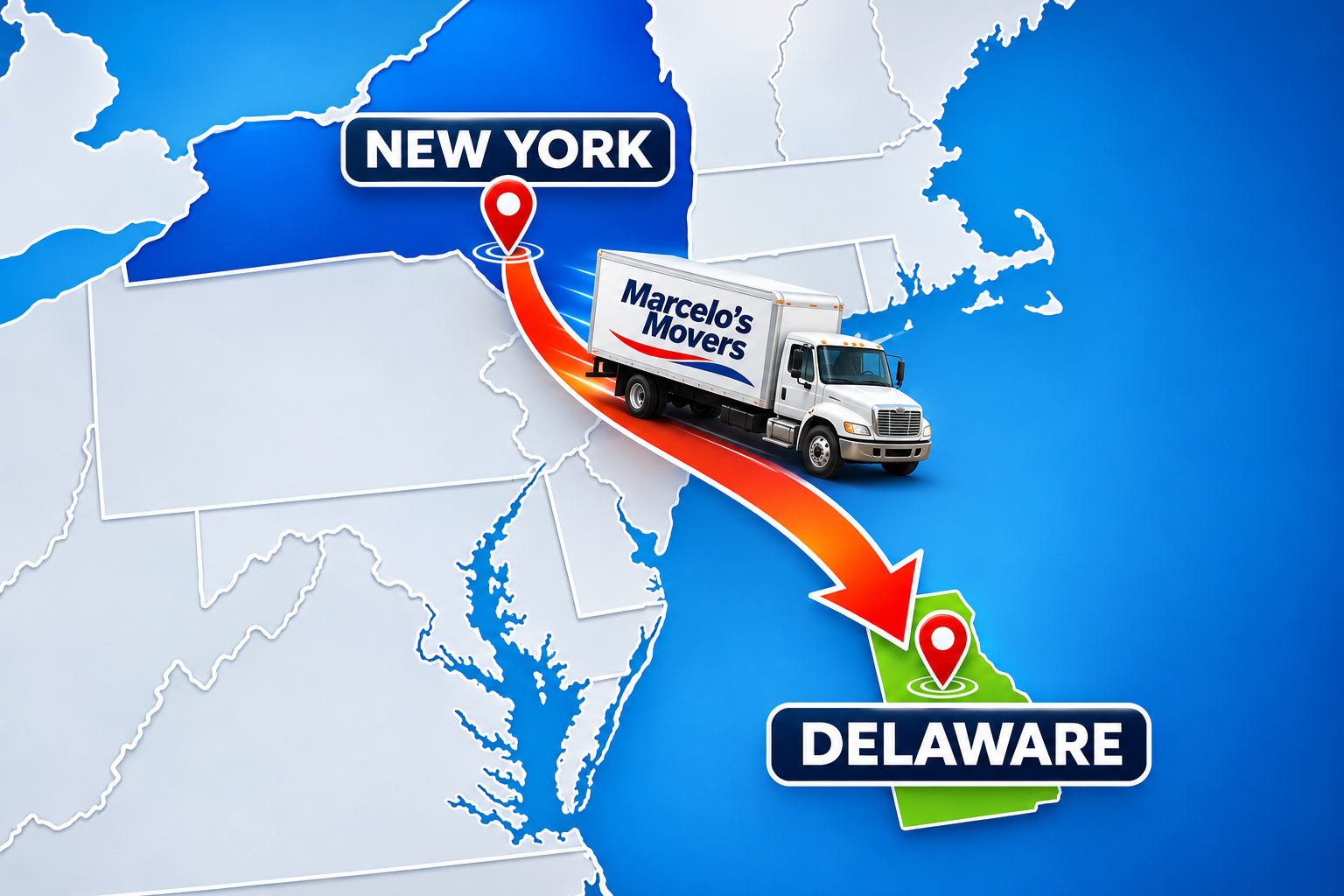
Moving from New York to Delaware can be an exciting change, whether you are relocating for work, looking for a different lifestyle, moving closer to family, or planning a new chapter. Although Delaware is relatively close to New York, an interstate move still requires careful preparation. You need to organise your belongings, arrange transportation, understand the moving timeline, and make sure your new home is ready before moving day. Marcelo’s Movers understands that a successful relocation depends on good planning, clear communication, and dependable moving support.
The distance between your current home and your new address will influence the arrangements you need to make. Moving from New York City to Wilmington, Dover, Newark, or another Delaware community may involve different travel routes, building access requirements, and delivery schedules. Planning these details early can help prevent last-minute complications.
1. Decide on Your Moving Date and Timeline
Your moving date is one of the first details to finalise. It affects availability, packing arrangements, transportation, and the time you have to prepare your new property.
Try to choose a moving date at least four to six weeks ahead whenever possible. This gives you enough time to compare moving services, organise your belongings, collect packing supplies, and manage address changes. If you are moving during summer, around a holiday, or at the end of the month, booking early can be particularly helpful because moving schedules may be busier.
Create a simple moving calendar with important deadlines. Include the date for confirming your movers, completing packing, transferring utilities, arranging building access, and collecting your keys. Keeping these tasks in one place makes the process easier to manage.
2. Understand the Distance and Route Between New York and Delaware
Although New York and Delaware share a relatively short regional distance, your actual travel time depends on your starting point, destination, traffic, and selected route.
For example, a move from Manhattan to Wilmington will involve different travel arrangements than a relocation from Queens to Dover. Traffic around New York City, road construction, weather, and congestion near major highways can affect transportation schedules.
Discuss the delivery route and estimated travel arrangements with your moving company before confirming the booking. Ask how loading, transportation, and unloading will be coordinated. It is also useful to understand whether the moving schedule includes any expected waiting time or additional stops.
Having a clear transportation plan helps you coordinate your own journey with the arrival of your household belongings.
3. Choose a Moving Company That Handles Interstate Relocations
Choosing the right moving company can make a significant difference to your relocation experience. An interstate move involves more coordination than simply transporting furniture across a neighbourhood. Your movers need to understand the logistics of collection, transportation, handling, and delivery across state lines.
Start by researching companies that have experience with moves between New York and Delaware. Check customer reviews, service details, insurance arrangements, and the company’s approach to scheduling.
People searching for the best local movers in NYC should also consider whether the company can manage the complete interstate relocation rather than only the local collection. A mover may offer excellent local services but not necessarily provide the transportation arrangements required for a move to another state.
Ask for a written estimate that explains the services included. Confirm whether packing, furniture protection, loading, transportation, unloading, and additional handling services are included or charged separately.
4. Understand the Cost of Moving from New York to Delaware
Your moving budget should account for more than the transportation of your belongings. The total cost can vary based on the size of your household, the distance between addresses, the amount of furniture, packing requirements, and the services you select.
Some of the main factors that influence moving costs include:
Volume of belongings: A larger household generally requires more truck space, labour, and packing materials. Removing items you no longer need can help reduce the volume of your move.
Packing requirements: Professional packing services may increase the overall cost, but they can save time and help protect fragile or valuable items.
Building access: Stairs, elevators, narrow hallways, long carrying distances, and parking restrictions can affect the amount of labour required.
Special handling: Large furniture, delicate artwork, musical instruments, and other items requiring additional care may need special arrangements.
Moving date: Demand can vary throughout the year. Flexible dates may give you more scheduling options.
Request a detailed estimate before booking. Ask whether the quote is binding or non-binding, what circumstances could change the final price, and whether any additional fees may apply.
5. Understand What Long-Distance Movers Should Provide
Even though the distance between New York and Delaware may be shorter than a cross-country relocation, moving across state lines requires proper coordination. Professional long distance movers should be able to explain how your belongings will be collected, transported, and delivered.
Before booking, ask about the company’s interstate operating authority, insurance or valuation options, estimated delivery arrangements, and procedures for handling damaged or missing items.
You should also understand the difference between released-value protection and full-value protection, where applicable. Ask the mover to explain the available coverage, exclusions, deductibles, and claims process in writing.
A reliable moving arrangement should include clear communication about pickup times, delivery expectations, payment terms, and the services included in your estimate.
6. Prepare for Packing and Protect Fragile Belongings
Packing is often one of the most time-consuming parts of an interstate move. Starting early gives you enough time to organise your belongings properly instead of rushing through everything during the final few days.
Begin with items you do not use regularly, such as seasonal clothing, decorative pieces, spare bedding, and books. Leave everyday essentials until closer to moving day.
Use strong boxes and appropriate packing materials. Wrap glassware, dishes, mirrors, and other fragile objects individually. Fill empty spaces inside boxes to reduce movement during transportation. Avoid making boxes so heavy that they become difficult or unsafe to lift.
Label every box with its destination room and a brief description of the contents. Mark fragile boxes clearly so they can receive appropriate handling.
Keep important documents, jewellery, medications, electronic devices, and essential personal items with you rather than placing them in the moving truck.
7. Check Your New Home Before Moving Day
Your new Delaware property should be ready before the moving truck arrives. If possible, visit the property in advance and check the areas where furniture and boxes will be placed.
Measure doorways, staircases, hallways, and elevator spaces. This is particularly important if you are bringing large sofas, beds, wardrobes, or appliances from your New York home.
Arrange any necessary cleaning, repairs, painting, or maintenance before moving in. Confirm that electricity, water, heating, internet, and other essential services are scheduled for activation.
If you are moving into an apartment or managed community, contact the property manager to ask about delivery rules, elevator reservations, parking permissions, and permitted moving hours.
These small checks can prevent delays and make unloading much easier.
8. Arrange Your Utilities and Change Your Address
Relocating to another state means updating several personal and household records. Do not leave these administrative tasks until after moving day.
Contact your current utility providers to arrange the disconnection or transfer of services. Set up electricity, water, gas, internet, and other necessary services at your Delaware address before arrival.
You should also update your mailing address with the United States Postal Service and notify banks, insurance providers, employers, subscription services, and other organisations.
If you have children, arrange school transfers and request the records needed for enrolment. If you have pets, update their veterinary records and make sure their identification details are current.
For vehicle and driver’s licence requirements, review the latest Delaware Division of Motor Vehicles guidance. New residents generally have state-specific registration and licensing obligations, so check the applicable deadlines and documents before relocating.
9. Plan Your Travel Separately From Your Household Move
Your personal travel arrangements should be coordinated with the moving schedule. Depending on your circumstances, you may drive to Delaware, travel by train, or use another form of transportation.
If you are driving, plan your route and allow extra time for traffic. Keep important documents, valuables, snacks, chargers, medications, and a change of clothes accessible.
If you are travelling with children, elderly family members, or pets, consider their comfort during the journey. Keep essential items separate from the belongings being transported by the movers.
It is also sensible to confirm the expected delivery window with your moving company. This helps you avoid arriving at your new property long before your belongings or reaching the property after the scheduled delivery.
10. Prepare an Essentials Box for Your First Night
Not every box will be unpacked immediately. After a long moving day, searching through dozens of cartons for basic household items can become frustrating.
Prepare a separate essentials box or bag that stays with you. Include items such as:
Toiletries, towels, and basic personal care products.
Phone chargers and important electronic accessories.
Medicines and essential medical supplies.
A few changes of clothing.
Bed sheets and basic bedding.
Drinking water and simple snacks.
Cleaning supplies and paper products.
Important documents and keys.
Keep this box clearly labelled and easily accessible. Having your everyday necessities nearby will make the first evening in Delaware more comfortable.
Conclusion
Moving from New York to Delaware can be a manageable experience when you plan the details in advance. Choosing a suitable moving date, understanding transportation costs, decluttering, packing carefully, and preparing your new property can help reduce unnecessary stress. It is equally important to work with a moving company that understands interstate relocation requirements and communicates clearly throughout the process.
Marcelo’s Movers can help you organise the moving arrangements and understand the services required for your relocation. Whether you are comparing the best local movers in NYC or researching experienced long distance movers, take time to review your options and confirm the details before booking. For assistance with planning your next move, contact us to discuss your relocation requirements.
Frequently Asked Questions
Booking around four to six weeks in advance is a useful starting point, although more time may be needed during busy moving seasons. Early booking gives you more flexibility when choosing dates and services.
The cost depends on the volume of belongings, distance, packing requirements, building access, moving date, and additional services. Request a personalised written estimate to understand the expected cost.
The cost depends on the volume of belongings, distance, packing requirements, building access, moving date, and additional services. Request a personalised written estimate to understand the expected cost.
Yes, you should choose a moving company that handles interstate relocations. Although the states are relatively close, transporting household belongings across state lines requires appropriate planning and transportation arrangements.
Keep important documents, medications, valuables, chargers, toiletries, essential clothing, and basic first-night supplies with you. These items should remain accessible rather than being packed into the moving truck.
Check utilities, internet access, doorways, hallways, parking arrangements, and any building moving restrictions. You should also confirm that the property is clean and ready to receive your furniture and household belongings.