
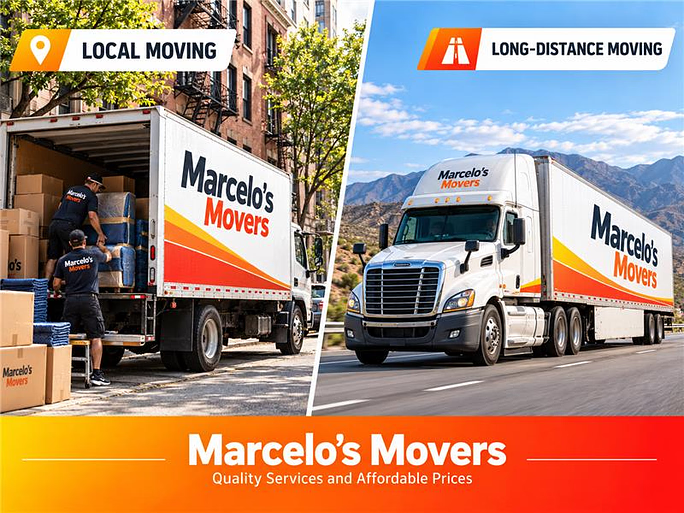
Moving can be exciting, but choosing the right moving company can quickly become confusing. Whether you are relocating across town or preparing to move to another state, the type of mover you choose can affect the cost, timing, logistics, and overall experience. Marcelo’s Movers helps customers understand their moving options so they can choose services that match the distance and complexity of their relocation. The key is knowing the difference between a local mover and a long-distance mover before you book your move.
The distance of your relocation is one of the first things to consider when deciding what type of moving service you need. A local move generally involves relocating within the same city or a nearby area, while a long-distance move typically covers a substantially greater distance and may cross state lines. However, distance is not the only factor that matters. The number of belongings, type of property, moving dates, access conditions, packing requirements, and delivery timeline can all influence which service is appropriate.
Local moves are often simpler because the moving crew may not need to travel hundreds of miles or coordinate an interstate delivery. Long-distance relocations require more planning because your belongings may need to travel through multiple areas, and the moving company must coordinate transportation, scheduling, fuel, route planning, and delivery arrangements.
Understanding these differences can help you avoid paying for unnecessary services or choosing a moving company that is not equipped for your relocation. If you are searching for the best local movers, it is important to look beyond online ratings and compare the company’s experience, services, pricing structure, availability, and ability to handle your specific type of move.
What Is a Local Move?
Before choosing a mover, it helps to understand what typically qualifies as a local relocation. A local move generally takes place within the same metropolitan area or a relatively short distance from your current property.
Local moves are often completed within a single day, although larger households or complicated properties may require additional time. Because the moving crew is operating within a familiar service area, scheduling can sometimes be more flexible.
Common examples of local moves include:
Moving across the city: You may be changing neighbourhoods while remaining within the same general metropolitan area. This type of move usually involves relatively short transportation distances.
Moving to a nearby town: A relocation to a neighbouring community may still qualify as a local or short-distance move depending on the mover’s service area and pricing structure.
Moving between apartments: Apartment relocations can be local even when the logistics are complicated by elevators, stairs, parking restrictions, or building rules.
Moving to a larger home nearby: Families who need more space may move locally while remaining close to their existing workplace, schools, or community.
The exact definition of a local move can vary between moving companies, so it is always useful to ask how the company classifies your specific relocation.
What Is a Long-Distance Move?
Long-distance moving involves transporting your belongings over a significantly greater distance. Depending on the location and moving company, the relocation may also involve crossing state or regional boundaries.
Long-distance moves require more logistical planning because the belongings must travel much farther between the origin and destination. The mover may need to coordinate a specific transportation route and delivery schedule.
Long-distance relocations can include:
Interstate moves: Moving from one state to another typically requires a mover experienced in interstate transportation and the applicable requirements.
Cross-country moves: Relocating across a large portion of the country requires extensive transportation planning and careful scheduling.
Major regional relocations: Even a move within a large region can involve significant distances and require long-distance moving expertise.
Relocations involving multiple stops: Some customers need belongings collected from one property and delivered to another location, potentially with additional stops or storage arrangements.
When comparing the best long distance movers, look for companies with experience handling the route and logistics involved in your specific relocation rather than choosing based solely on the lowest estimate.
Local vs. Long-Distance Moving: The Main Differences
Although both services involve packing, loading, transporting, and unloading belongings, the logistics can be quite different. Understanding these differences makes it easier to identify which service is appropriate.
The most important differences include:
Travel distance: Local moves involve relatively short transportation distances, while long-distance moves can require several days of travel.
Scheduling: Local moves may offer more flexible scheduling, whereas long-distance relocations often require more precise pickup and delivery coordination.
Pricing: Local movers may charge based on hourly labour, while long-distance moves are often estimated using factors such as distance, shipment size, services, and transportation requirements.
Delivery: Local moves can often be completed on the same day. Long-distance moves may involve a longer delivery window depending on the route and transportation arrangements.
Planning: Long-distance relocations generally require more advance planning because transportation and delivery logistics are more complex.
How Local Moving Costs Are Usually Determined
Understanding how local moving prices work can help you prepare a realistic budget. Local moving companies commonly consider the amount of labour required, the size of the move, the number of movers, and the estimated time needed.
Additional services can also influence the final cost. For example, packing, furniture disassembly, specialty item handling, stairs, long carries, or difficult access may require additional labour.
When requesting an estimate, provide accurate information about your home and belongings. Underestimating the size of the move can result in additional costs or unexpected delays.
Ask whether the estimate includes:
Labour: Confirm how many movers are included and how the labour is charged.
Transportation: Understand whether the moving vehicle and transportation costs are included in the quoted price.
Packing services: If you need professional packing, ask whether materials and labour are included.
Special handling: Large, fragile, heavy, or valuable items may require additional equipment or labour.
Additional fees: Ask about stairs, elevators, long carries, parking challenges, or other conditions that could affect the cost.
A transparent estimate makes it easier to compare different movers and avoid unpleasant surprises.
How Long-Distance Moving Costs Are Different
Long-distance moving costs can be more complex because the mover must account for transportation over a much greater distance. The shipment’s size and weight, travel distance, services, timing, and delivery requirements can all affect the estimate.
Additional factors may include fuel expenses, packing services, storage, specialty handling, and the logistics associated with interstate transportation.
Before choosing a long-distance mover, request a detailed estimate that explains what is included. Avoid comparing companies based only on the headline price.
Important questions include:
How is the shipment calculated? Ask whether the estimate is based on weight, volume, distance, or another pricing method.
What services are included? Make sure packing, loading, transportation, unloading, and other requested services are clearly identified.
What is the delivery timeframe? Long-distance deliveries may have broader windows than local moves, so clarify the expected schedule.
Is storage available? Temporary storage can be useful when your new home is not ready when your belongings arrive.
What happens if the moving schedule changes? Understanding the company’s policies can help you prepare for unexpected circumstances.
Which Mover Is Better for an Apartment Move?
Apartment moves can be either local or long-distance depending on where you are relocating. The important issue is not simply the type of property but the distance and logistical requirements.
Local apartment moves may be relatively straightforward, but elevators, narrow hallways, stairs, parking restrictions, and building scheduling rules can make them more complicated.
For an interstate apartment relocation, the moving company needs to have the appropriate long-distance capabilities and transportation arrangements.
Before booking, provide details about:
The floor where your apartment is located.
Whether an elevator is available.
The distance from the building entrance to the moving truck.
Parking restrictions or loading-zone requirements.
Building reservation requirements.
Large furniture or appliances that require special handling.
Providing this information upfront helps the moving company plan appropriately.
When Should You Choose a Local Mover?
A local mover may be the most practical option when your relocation remains within the company’s local service area. These movers can be particularly convenient when you need a relatively quick and straightforward relocation.
Local moving services can be suitable for customers who are:
Relocating within the same city.
Moving to a nearby neighbourhood.
Changing apartments locally.
Moving into a nearby house.
Transporting furniture or household items within a local area.
Even for a short move, it is important to check the company’s reputation, insurance information, service terms, and experience with your type of property.
When Should You Choose a Long-Distance Mover?
A long-distance mover is generally more appropriate when your belongings need to travel a significant distance or cross state lines. These moves require transportation planning that goes beyond the needs of a typical local relocation.
Consider a long-distance specialist when:
You are moving to another state.
Your destination is several hundred miles away.
You require coordinated pickup and delivery dates.
You need temporary storage during the relocation.
You have a large household shipment.
You are moving specialty items over a significant distance.
The more complex the relocation, the more important it becomes to choose a company with demonstrated experience handling similar moves.
What Should You Look for in a Moving Company?
Whether your move is local or long-distance, selecting the right company requires careful comparison. Price is important, but it should not be the only factor.
Look for:
Relevant experience: Choose a mover familiar with the type of relocation you are planning.
Clear estimates: A detailed estimate should explain the services and costs involved.
Good communication: The company should be responsive and willing to answer questions before moving day.
Appropriate equipment: Make sure the mover has suitable vehicles, moving equipment, and supplies for your belongings.
Professional processes: Clear documentation, scheduling, and service terms can make the moving experience easier to manage.
Positive customer feedback: Reviews can provide useful insight into reliability, communication, punctuality, and care with belongings.
How to Prepare for a Local or Long-Distance Move
Good preparation can make any relocation more efficient. The earlier you begin organising, the easier it becomes to identify what needs to be packed, transported, stored, donated, or discarded.
Start by creating an inventory of your belongings. This gives you a clearer understanding of the shipment size and can help when requesting estimates.
Next, decide what you actually want to take with you. Moving unwanted furniture, clothes, and household items adds unnecessary cost and effort.
You should also:
Organise important documents: Keep passports, identification, financial documents, medical records, and other essential paperwork separately.
Label boxes: Clear labels make it easier to identify which rooms boxes belong to and which items should be handled carefully.
Protect valuable items: Discuss valuable, fragile, or specialty belongings with your mover before moving day.
Prepare the property: Clear pathways and ensure movers have safe access to furniture and boxes.
Confirm the schedule: Reconfirm pickup and delivery details before the move.
Common Mistakes to Avoid When Choosing a Mover
Many moving problems can be avoided by doing basic research before signing an agreement. Rushing the decision or choosing a company based solely on price can create unnecessary complications.
Avoid these common mistakes:
Choosing the cheapest quote automatically: A low estimate may not include all the services you need.
Failing to provide accurate information: If you do not disclose stairs, long carries, large furniture, or other challenges, the final cost or schedule may change.
Not asking about delivery: Long-distance moves require particular attention to pickup and delivery windows.
Ignoring the contract: Read the service agreement carefully and ask questions about anything you do not understand.
Leaving everything until moving day: Last-minute packing and preparation can create delays and additional stress.
How to Decide Which Mover You Actually Need
The simplest way to choose between a local and long-distance mover is to start with the destination. If you are moving within a relatively short local service area, a local mover may be sufficient. If you are travelling a significant distance or crossing state lines, you will generally need a mover experienced in long-distance transportation.
After determining the distance, consider the complexity of the move. A small local apartment move may require minimal services, while a large family relocation could require packing, specialty handling, storage, and extensive scheduling even if the destination is nearby.
Your final choice should therefore be based on distance, shipment size, services, property conditions, timing, and the mover’s experience with comparable relocations.
Conclusion
Choosing between a local and long-distance mover ultimately depends on where you are going, how far your belongings need to travel, and how complex your relocation will be. A local move may be the right choice for a nearby relocation, while a long-distance specialist is better suited to interstate or substantially longer moves that require more transportation planning. Marcelo’s Movers can help you evaluate your moving requirements and select a service that matches your relocation. If you are planning a move and want to discuss your requirements, contact us today so we can help you plan the next steps with greater confidence.
Frequently Asked Questions About Local and Long-Distance Movers
The primary difference is the distance and logistics involved. Local movers generally handle relocations within a nearby service area, while long-distance movers specialise in transporting belongings over substantially greater distances and may handle interstate moves.
Local moves are often less expensive because transportation distances are shorter. However, the final price depends on factors such as the number of belongings, labour, packing requirements, access conditions, and additional services.
In most cases, an interstate relocation requires a mover experienced in long-distance transportation and the applicable requirements for interstate moving. Always confirm that the company is equipped to handle your specific route.
It is generally best to book as early as practical, particularly during busy moving seasons. Long-distance moves often benefit from additional planning because pickup and delivery schedules require more coordination.
Compare experience, reviews, estimates, services, communication, insurance information, and contract terms. Ask detailed questions about your specific move and make sure you understand exactly what is included before booking.