
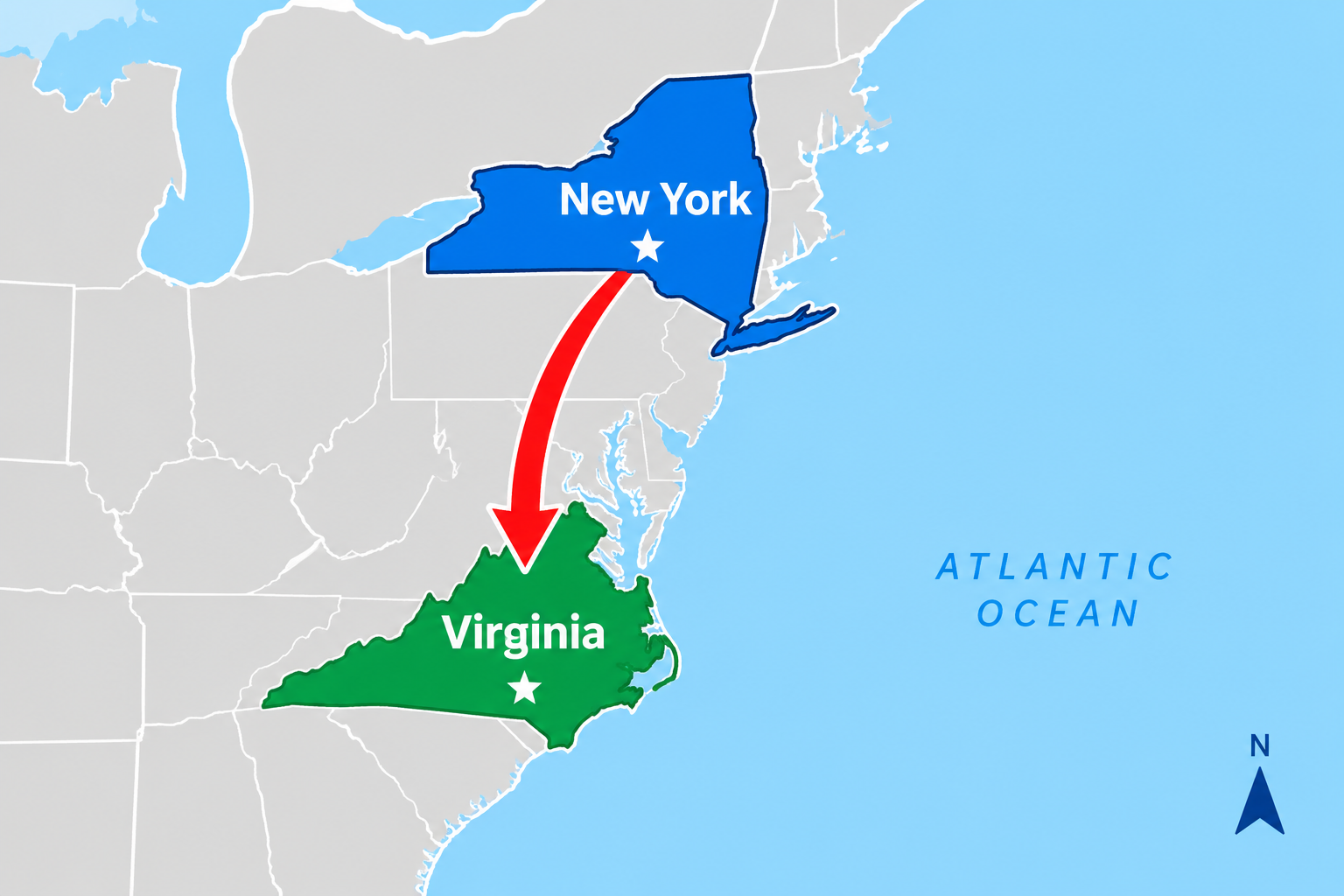
Moving to a new state is a major decision, especially when leaving a busy metropolitan area like New York City for Virginia. Whether you are relocating for work, family, affordability, lifestyle, or a fresh start, planning ahead can make the transition significantly easier. Marcelo’s Movers understands that interstate relocations involve more than simply loading boxes onto a truck. From choosing the right moving service to preparing your belongings, understanding your new area, and managing your moving budget, every detail deserves attention.
Moving from New York City to Virginia can offer a significant change in pace and lifestyle. Virginia includes a wide range of communities, from busy Northern Virginia suburbs close to Washington, D.C., to smaller towns and coastal communities. Your experience will depend heavily on your destination, so identifying your preferred city or region should be one of the first steps in your relocation planning.
The distance between NYC and Virginia also means this is not a typical local move. Your belongings will need to travel across state lines, which means transportation, scheduling, packing, and delivery require more coordination than a move within New York City. Planning several weeks or even months ahead can help you avoid unnecessary stress and make it easier to compare moving companies.
If you are moving from new york to virginia, start by creating a detailed relocation checklist. Think about where you will live, what belongings you actually want to take, how much you can spend, when you need to move, and whether you require additional services such as packing, storage, furniture disassembly, or specialty-item transportation. Having these details ready will make conversations with moving companies much more productive.
Why Are People Moving From NYC to Virginia?
Before arranging transportation, it helps to understand what is motivating your relocation. Knowing your priorities can help you choose the right Virginia destination and make better decisions about housing, transportation, schools, employment, and lifestyle.
People relocate from New York City to Virginia for several common reasons:
Lower living costs: Some Virginia communities can offer lower housing and everyday living expenses compared with New York City. The exact savings depend on the location and lifestyle you choose.
More space: Moving away from Manhattan or other densely populated parts of NYC can make it easier to find larger homes, private outdoor areas, and more residential neighbourhoods.
Career opportunities: Northern Virginia has a strong employment market, particularly in technology, government contracting, healthcare, defence, and professional services.
Lifestyle changes: Some people want less congestion, shorter commutes, access to nature, or a quieter residential environment.
Family considerations: Virginia can be attractive to people who want to be closer to relatives or establish a different environment for raising children.
Understanding your primary reason for moving will help you determine which part of Virginia makes the most sense for you.
Choosing the Right Virginia Destination
Virginia is a large and diverse state, so choosing a destination should happen before you finalise your moving plans. Your preferred area will influence housing costs, commuting requirements, transportation, and the overall cost of the relocation.
Northern Virginia communities such as Arlington, Alexandria, Fairfax, and parts of Loudoun and Prince William counties can appeal to people who want access to Washington, D.C. and a strong employment market. Other areas of the state offer different lifestyles and housing options.
Consider the following when evaluating your destination:
Employment: Research your commute and access to your workplace before choosing a home.
Housing: Compare home prices, rental costs, property taxes, and neighbourhood characteristics.
Transportation: Determine whether you will drive, use public transportation, or rely on a combination of options.
Schools: Families with children should research school districts and nearby educational options.
Lifestyle: Consider access to restaurants, shopping, parks, entertainment, healthcare, and other amenities that matter to you.
Choosing the right destination early will also help you provide accurate information when requesting moving estimates.
Understanding the Distance and Logistics
An interstate move requires considerably more planning than a short-distance relocation. Your belongings may spend multiple days in transit, and your pickup and delivery schedules need to be coordinated carefully.
The logistics can become more complicated if you are moving from an apartment or high-rise building in NYC. Elevators, loading zones, parking restrictions, narrow streets, building management requirements, and limited access can all affect moving day.
Before your move, determine:
Where the moving truck can legally park at your NYC property.
Whether your building requires a certificate of insurance or moving-company documentation.
Whether you need to reserve a service elevator.
Whether there are specific moving hours.
Whether your Virginia property has similar access restrictions.
How far the truck will need to travel from the building entrance to your residence.
Providing this information to your mover in advance can help reduce delays and unexpected complications.
How to Choose a Long-Distance Moving Company
Choosing the right moving company is one of the most important decisions you will make. Interstate relocations require a company that understands long-distance transportation, scheduling, documentation, and the practical challenges associated with moving between states.
When comparing the best long distance movers, don’t focus only on the lowest estimate. A significantly cheaper quote may not provide the same services, experience, equipment, or level of communication as another company.
Look for several important qualities:
Interstate experience: Choose a mover that regularly handles moves between states rather than a company that primarily focuses on local relocations.
Transparent estimates: Your quote should clearly explain what services are included and identify potential additional charges.
Clear communication: A reliable moving company should be able to explain pickup procedures, delivery expectations, packing options, and other important details.
Appropriate equipment: Long-distance transportation requires suitable vehicles and equipment for safely handling household belongings.
Professional documentation: Make sure you understand the paperwork, terms, responsibilities, and coverage associated with your move.
Take time to compare several options before making a final decision.
Creating a Realistic Moving Budget
An interstate move can involve more expenses than simply paying for transportation. Creating a detailed budget before moving day can help you avoid financial surprises.
Your moving budget may include:
Moving company charges: Transportation and labour generally represent a significant portion of the moving budget.
Packing supplies: Boxes, tape, protective materials, specialty containers, and other supplies can add up quickly.
Professional packing: If you prefer to have the moving company pack your belongings, ask for this service to be included in the estimate.
Storage: Temporary storage may be necessary if your new home is not ready when your belongings arrive.
Travel expenses: Consider flights, fuel, accommodation, meals, tolls, and other travel expenses for your household.
Cleaning: You may need to clean your NYC property before handing over the keys and prepare the Virginia property before unpacking.
New-home expenses: Account for utility deposits, furniture purchases, household supplies, and other costs associated with settling in.
Building a buffer into your budget is also wise because unexpected expenses can arise during a long-distance relocation.
What Should You Take With You?
Moving is an excellent opportunity to evaluate your belongings. Transporting items you no longer use increases the size and potentially the cost of your shipment.
Before packing, divide your belongings into several categories. Keep the items you genuinely need, donate things that are still useful, sell valuable items you no longer want, and responsibly dispose of damaged or unusable possessions.
Pay particular attention to large furniture. A piece that works perfectly in a NYC apartment may not be appropriate for your new home. Conversely, moving into a larger Virginia property may create space for furniture you previously had to store.
Ask yourself:
Do I still use this item?
Will it fit in my new home?
Is it expensive or difficult to replace?
Does transporting it make financial sense?
Could it be donated or sold locally?
Reducing your shipment before moving day can make packing and transportation more manageable.
Preparing Your NYC Apartment or Home
Preparing your current property properly can make moving day considerably smoother. NYC properties often present unique logistical challenges, so early preparation is especially valuable.
Start by contacting your building management or landlord to determine the moving requirements. Some buildings require advance reservations, proof of insurance, specific moving hours, or deposits.
You should also measure large furniture and confirm that it can pass through hallways, doors, elevators, and stairways.
Before the movers arrive:
Pack nonessential items early: Start with seasonal clothing, decorations, books, and other belongings you will not need immediately.
Create an essentials bag: Keep important documents, medication, chargers, toiletries, clothing, and other immediate necessities separate.
Protect valuables: Keep irreplaceable documents, jewellery, and other highly valuable personal items with you when practical.
Clear pathways: Make it easier for movers to access furniture and boxes.
Confirm building arrangements: Make sure elevator reservations and other requirements are handled before moving day.
Good preparation can help prevent avoidable delays.
Preparing Your Virginia Home
Your new home should also be prepared before the moving truck arrives. This is particularly important if you are moving into a property that has been vacant or recently purchased.
If possible, arrange for cleaning before your belongings arrive. It is much easier to clean floors, cabinets, closets, and other areas before furniture and boxes fill the space.
You should also confirm that utilities such as electricity, water, heating or cooling, and internet are ready when you move in.
Think about where large furniture will go before unloading begins. Creating a basic floor plan can help movers place heavy items in the correct rooms instead of requiring you to move them later.
Also check access to your new property. If the road, driveway, parking area, or building entrance presents restrictions, tell your moving company beforehand.
Packing for an Interstate Move
Packing carefully becomes particularly important when belongings will travel a long distance. Items may experience more movement and handling during a multi-state relocation than during a short local move.
Use sturdy boxes and appropriate protective materials for fragile belongings. Avoid overloading boxes, particularly when packing books, dishes, or other heavy items.
Clearly label each box with its destination room and a brief description of the contents. Consider adding a note such as “FRAGILE” to boxes containing breakable items.
For valuable or important possessions, maintain a separate inventory. Photographs can also be useful for documenting the condition of valuable furniture or electronics before transportation.
If you choose professional packing services, discuss your expectations with the moving company beforehand so you understand exactly what will be packed and how specialty items will be handled.
What Should You Keep With You During the Move?
Not everything should go into the moving truck. Some belongings are better kept with you so they remain accessible throughout the journey.
Keep important items such as identification, financial documents, property paperwork, keys, chargers, medications, essential clothing, and basic toiletries easily accessible.
You may also want to keep a small set of cleaning supplies, snacks, water, and basic tools available during the transition.
For families, prepare a separate bag for children containing clothing, entertainment, snacks, and other essentials. If you have pets, plan their transportation separately and make sure they have everything they need during the journey.
Having an essentials bag can make the first night in your new home much easier, especially if your shipment arrives later than you do.
Planning Your Moving Timeline
A good timeline can prevent many last-minute problems. Begin planning as soon as you know that you are relocating.
Several weeks before the move, start researching moving companies, requesting estimates, sorting belongings, and determining your preferred moving date.
As the move approaches, finalise your mover, begin packing less frequently used items, notify relevant organisations of your address change, and make arrangements for utilities.
During the final week, focus on essentials, complete remaining packing, confirm the moving schedule, and make sure building requirements are satisfied.
On moving day, keep important documents and personal essentials separate from the main shipment. Complete a final walkthrough of your NYC property after everything has been loaded.
Common Mistakes to Avoid When Moving From NYC to Virginia
Long-distance moves can become stressful when basic planning is overlooked. Avoiding common mistakes can make your relocation considerably more efficient.
Some frequent mistakes include:
Choosing a mover based only on price: A low estimate may not represent the complete cost or service level.
Waiting too long to book: Popular moving dates can fill quickly, particularly during peak moving seasons.
Underestimating belongings: An inaccurate inventory can make your original estimate less reliable.
Forgetting building rules: NYC apartments may have specific elevator, parking, and moving-hour requirements.
Failing to plan for delivery: Make sure someone will be available to receive your belongings at the Virginia destination.
Packing important documents in the moving truck: Keep essential personal documents and other critical items accessible during travel.
Not preparing the new home: Utilities, access, cleaning, and furniture placement should be considered before arrival.
What to Expect After You Arrive in Virginia
The move is not finished when the truck arrives. Settling into a new state involves several administrative and practical tasks.
Start by confirming that your belongings have arrived and checking them against your inventory. If there are any concerns about damage or missing items, document them promptly and follow the moving company’s claims process.
You will also need to update your address with relevant organisations and complete state-specific administrative requirements. Depending on your circumstances, this may include driver’s licence, vehicle registration, voter registration, insurance, banking, employment, and other records.
Take time to learn your new neighbourhood as well. Identify nearby grocery stores, healthcare providers, schools, pharmacies, public transportation options, and other services you are likely to need.
How to Make the Transition Easier
Relocating from one of the country’s busiest cities to Virginia can be a major lifestyle adjustment. Give yourself time to settle into your new environment rather than expecting everything to feel familiar immediately.
Create a manageable unpacking plan. Start with bedrooms, bathrooms, the kitchen, and other essential spaces before moving on to less important boxes.
Keep important paperwork organised and maintain a list of outstanding tasks. This can include address changes, registration requirements, utility setup, home repairs, and other administrative responsibilities.
Most importantly, focus on the reasons you decided to move. Whether you wanted more space, a different lifestyle, new career opportunities, or a change of environment, keeping your original goals in mind can make the adjustment easier.
Conclusion
Moving from New York City to Virginia is a major transition, but careful planning can make the process far more manageable. From choosing the right destination and moving company to preparing your NYC property, budgeting for the relocation, packing carefully, and getting your Virginia home ready, every stage benefits from advance preparation. Marcelo’s Movers can help make the relocation process more organised by supporting you with the practical requirements of a long-distance move. If you are planning your relocation and want to discuss your moving requirements, contact us to get started and take the next step toward a smoother move.
Frequently Asked Questions About Moving From NYC to Virginia
These are some of the most common questions people ask when planning an interstate relocation from New York City to Virginia.
It is best to begin planning several weeks or months in advance. Starting early gives you time to compare moving companies, organise belongings, arrange building requirements, and choose a suitable moving date.
Yes. Because the relocation involves travelling between New York and Virginia, it is an interstate move and requires long-distance transportation planning.
Reducing the number of belongings you transport, comparing multiple estimates, choosing your moving date carefully, and packing some items yourself can potentially reduce costs. Always confirm which services are included in your estimate.
Professional movers can simplify a long-distance relocation by handling loading, transportation, unloading, and optional packing or specialty services. If you choose professional assistance, compare experience, pricing, documentation, and services before booking.
Make sure utilities are active, the property is accessible and clean, building or parking requirements are handled, and you know where large furniture should be placed. Having these details organised can make unloading much easier.